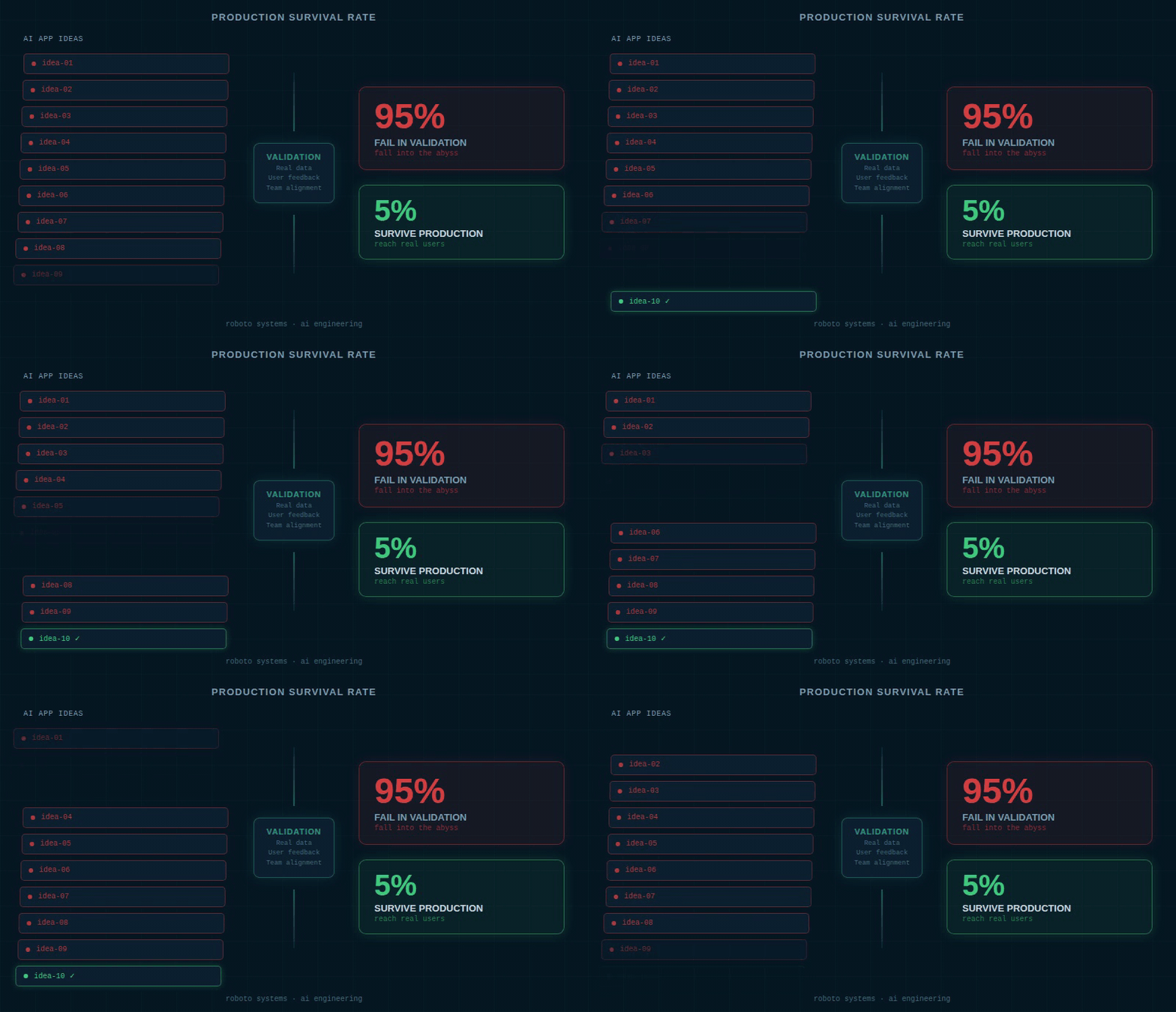
The production reality: only 5% of AI apps survive the validation stages. The other 95% fail before reaching real users.
Building an AI app has never been easier. You can go from idea to working prototype in a few hours. And then — almost every time — it falls apart before it reaches real users.
Only 5% of AI-coded apps survive in production. The other 95% fail at validation: they cannot get real data, cannot gather meaningful feedback, or cannot get team alignment in time. Each failure is its own dead end, and together they form a gauntlet that most products never clear.
The maddening part is that the tools keep getting better. Vibe coding and AI-assisted development genuinely do make you faster. So why does speed keep making things worse? And what do the teams that ship successfully know that everyone else is missing?
The Risk-vs-Speed Trap That Kills AI Projects
Think of vibe coding like piloting a jet. The faster you go, the more precisely you have to fly — and the harder the crash when something goes wrong. When you are working alone on a solo project, a crash just means you restart. When you are part of a team with real users, the blast radius is different.
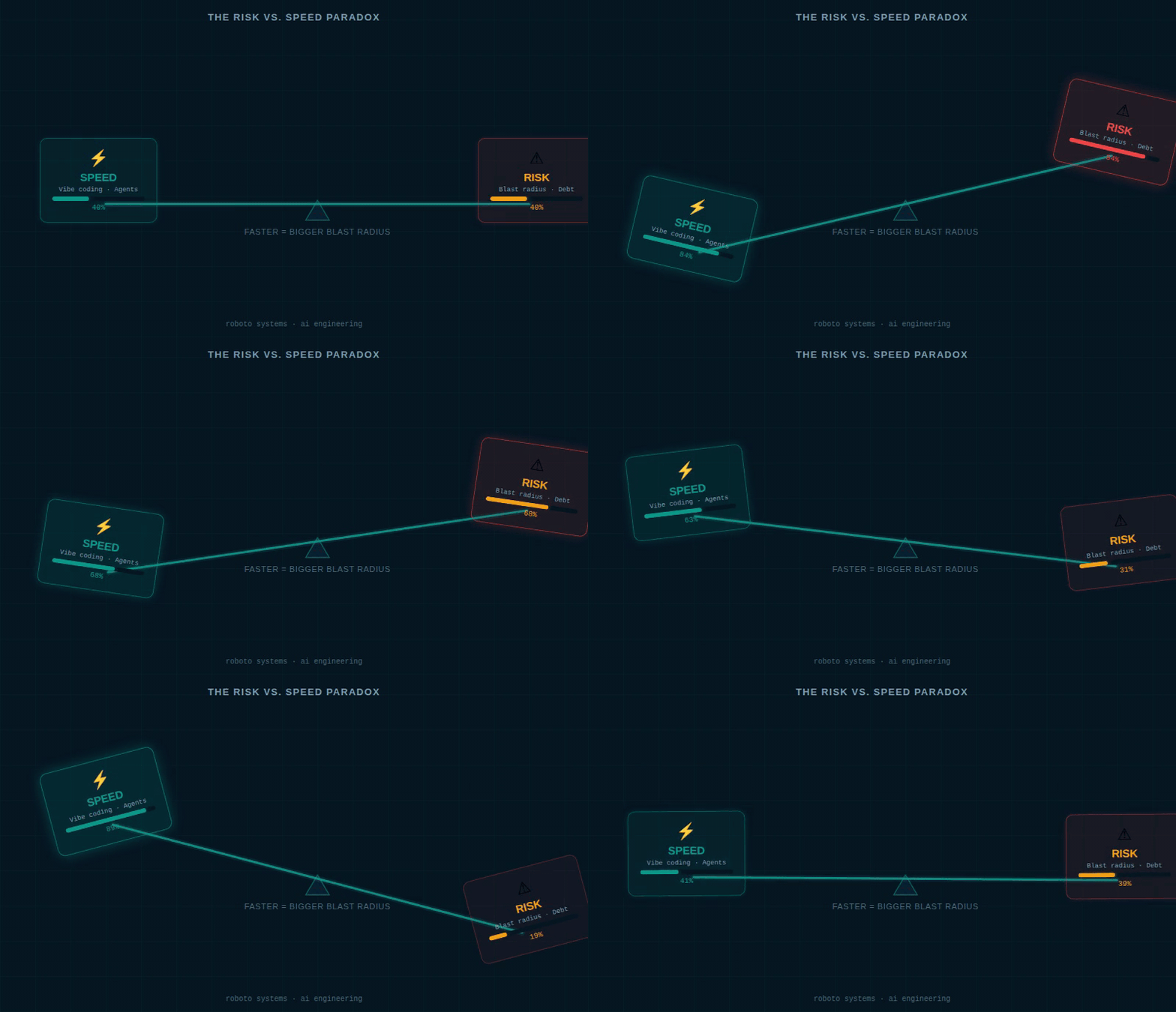
The developer dilemma: every speed gain raises the risk of failure in a connected team system.
A solo developer can merge code without reading every line and shrug when an app breaks. But in a team environment — one where systems must be reliable, accurate, secure, and compliant — that same approach can cascade into something much bigger.
At massive scale, the problem becomes extreme. When a platform handles billions of users and its codebase is 20 years old, you cannot just patch in an AI-powered experiment. A bug does not just break your app. It breaks a public utility.
"Building new AI features on top of legacy infrastructure can feel almost impossible. New model releases come every few weeks, and by the time a demo is complete, even great ideas can feel out of date."
This is the risk-versus-speed paradox at its most extreme. The pressure to ship fast pushes you to cut corners. But cutting corners in a connected system multiplies the cost of every mistake. And the answer is not "slow down" — that just means you miss the window entirely.
The Three Problems That Make Validation So Hard
The Blank Canvas Trap
The most common way developers try to solve the validation problem is to build a prototype in isolation — in a standalone AI coding environment, with no connection to the real product. It looks good in a demo. But you cannot test it against real data, see how it behaves in the actual product's UI, or gather genuine user feedback. You are building on blank paper.
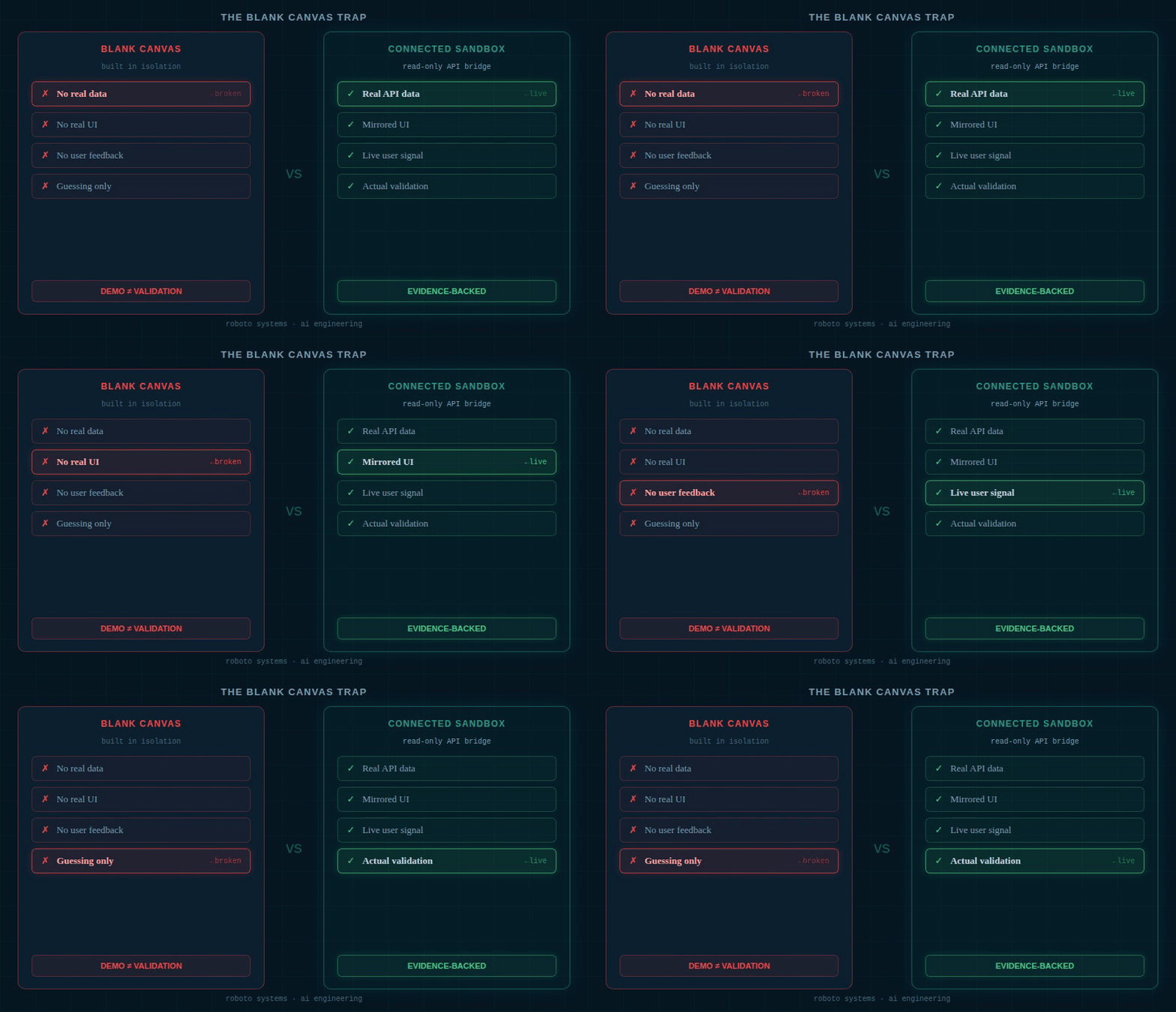
Building in isolation vs. building connected — the difference between a demo that impresses in a meeting and one that actually validates your idea.
This is what engineers call the blank canvas problem. Your prototype looks promising, but without API access or real data, you have no idea if it will actually work. You are guessing at user behavior. You are guessing at data edge cases. And when the guess turns out to be wrong at the production stage, you are starting over.
A prototype that cannot access real data is a demo, not a validation. The gap between "looks great in the sandbox" and "survives contact with production" is exactly the 95% failure zone. Closing that gap requires a different kind of sandbox — one that is connected, not blank.
The Validation Stage Bottleneck
Even with a great prototype, validation involves three gates that most projects fail to pass: getting real data to test with, gathering genuine user feedback, and achieving team alignment before the window closes.
Each gate takes time. And with model capabilities advancing every few weeks, a prototype that was cutting-edge when you started can feel obsolete by the time it clears legal review. The teams that succeed are not the ones who move fastest through this process — they are the ones who have found a way to run validation and experimentation simultaneously.
The Blast Radius of Vibe-Coded Production Code
There is a final, less obvious trap. When vibe-coded prototypes do make it to production, they often carry technical debt — shortcuts and workarounds that made sense for a quick demo but create problems in a system that thousands of people depend on. Every system that touches it now has to absorb the cost of that debt. Over time, the weight compounds.
The instinct is to polish the prototype until it is good enough to ship. The teams who get out of the 95% have learned that this instinct is wrong — and the solution is counterintuitive.
The Two-Track System That Escapes the Trap
Build a Connected Sandbox
The solution starts with rejecting the blank canvas entirely. Instead of building a prototype in isolation, you build it inside a connected sandbox — an environment that mirrors your real product's UI and connects to your real data via read-only API access.
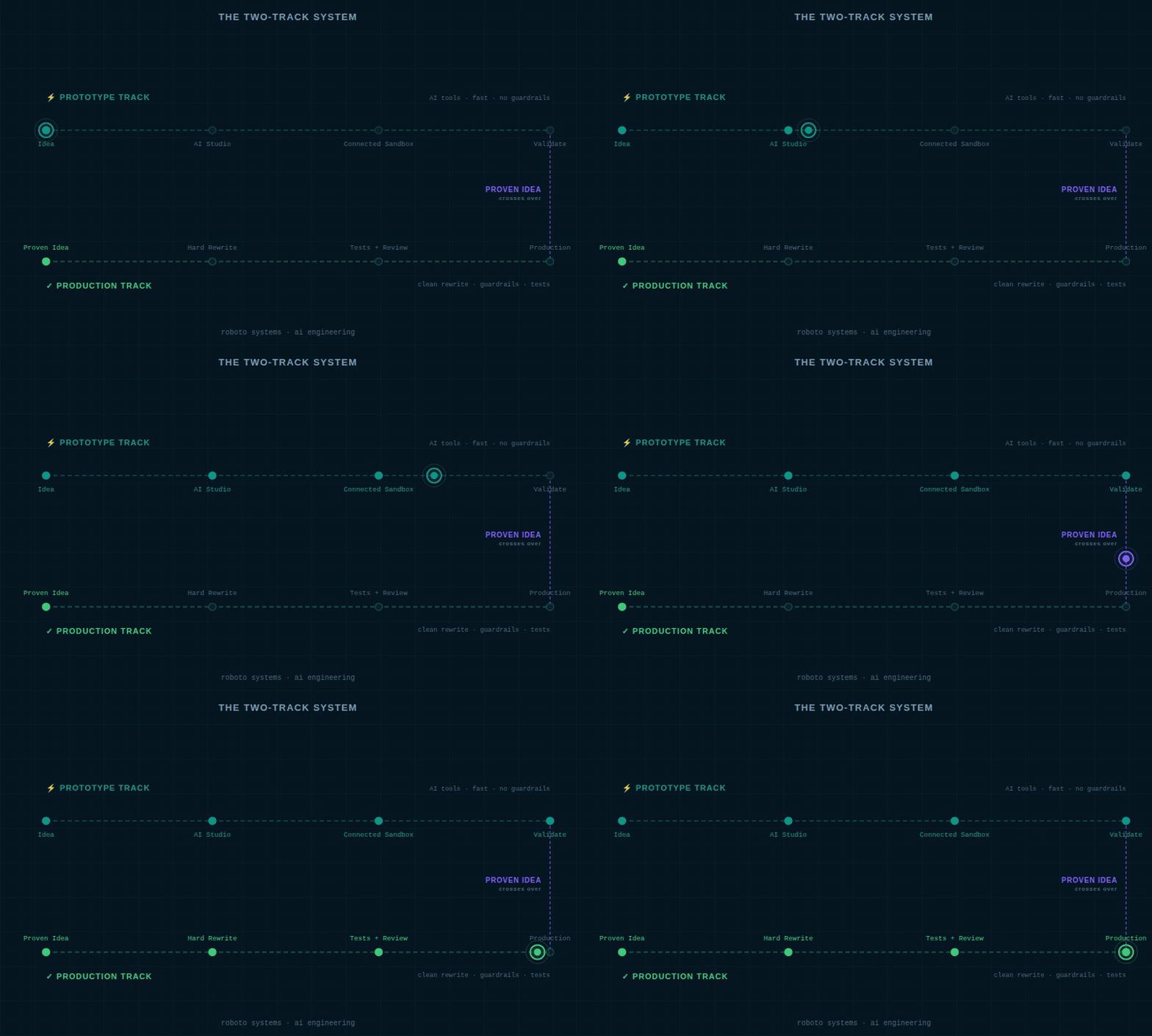
The two-track system: prototype fast with AI tools in a connected sandbox, validate with real data, then rebuild cleanly for production.
The key word is read-only. The sandbox has access to real data so your prototype behaves exactly as it would in production — but it cannot write to the production system, so there is no blast radius. You get all the signal from real data with none of the risk of touching live infrastructure.
This is exactly what engineers at a major video platform built: a rapid, full-stack product validation platform that let developers access real platform data, see how prototypes looked inside the actual product UI, and iterate in real time. Features that once took multiple cycles just to show an initial demo could now be built and validated in weeks.
Embrace Throwaway Code
Here is the counterintuitive part: the prototype is meant to be thrown away.
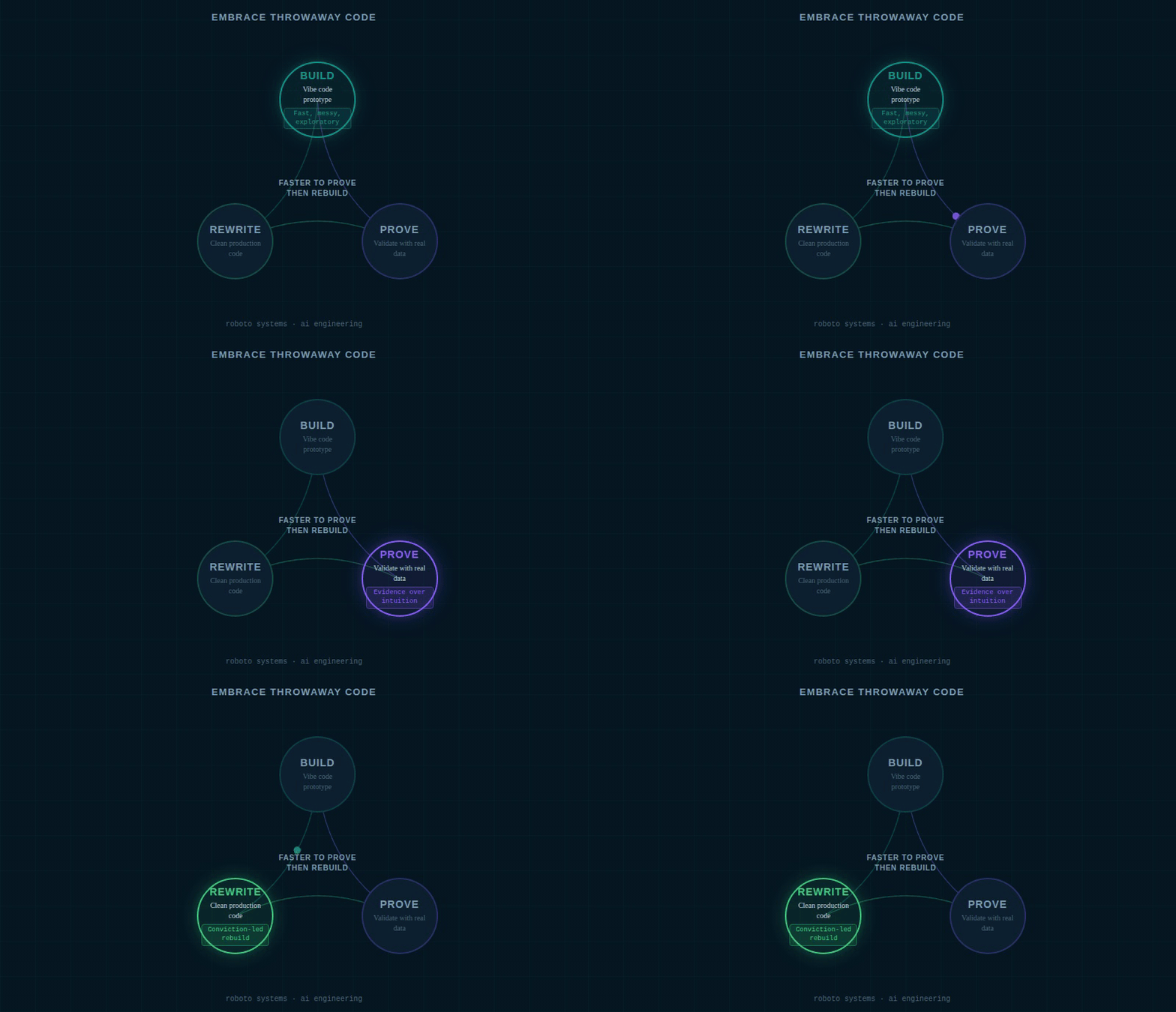
The throwaway code cycle: prototype quickly to prove the idea, then rebuild clean for production. It is faster to rewrite a proven concept than to polish a messy prototype.
The instinct is to take the prototype and clean it up — fix the shortcuts, remove the hacks, add the tests. But that approach carries all the original technical debt into production. The faster path is to use the prototype to prove the idea works, then do a deliberate, clean rewrite once you have conviction.
"Use the prototype to prove the idea, and then do a hard rewrite in production with more conviction. It is faster to rebuild a proven idea than to polish a messy prototype."
This works because conviction changes how you write code. When you already know what the system needs to do — because you have validated it with real data — the rewrite goes faster and cleaner than the original prototype. You are not exploring anymore. You are building.
Democratize Who Can Prototype
There is a third shift that matters at team scale. When prototyping requires deep engineering knowledge, only engineers prototype. That means most of the good product ideas — from product managers, UX researchers, and domain experts — never get tested. They stay as slides in a presentation.
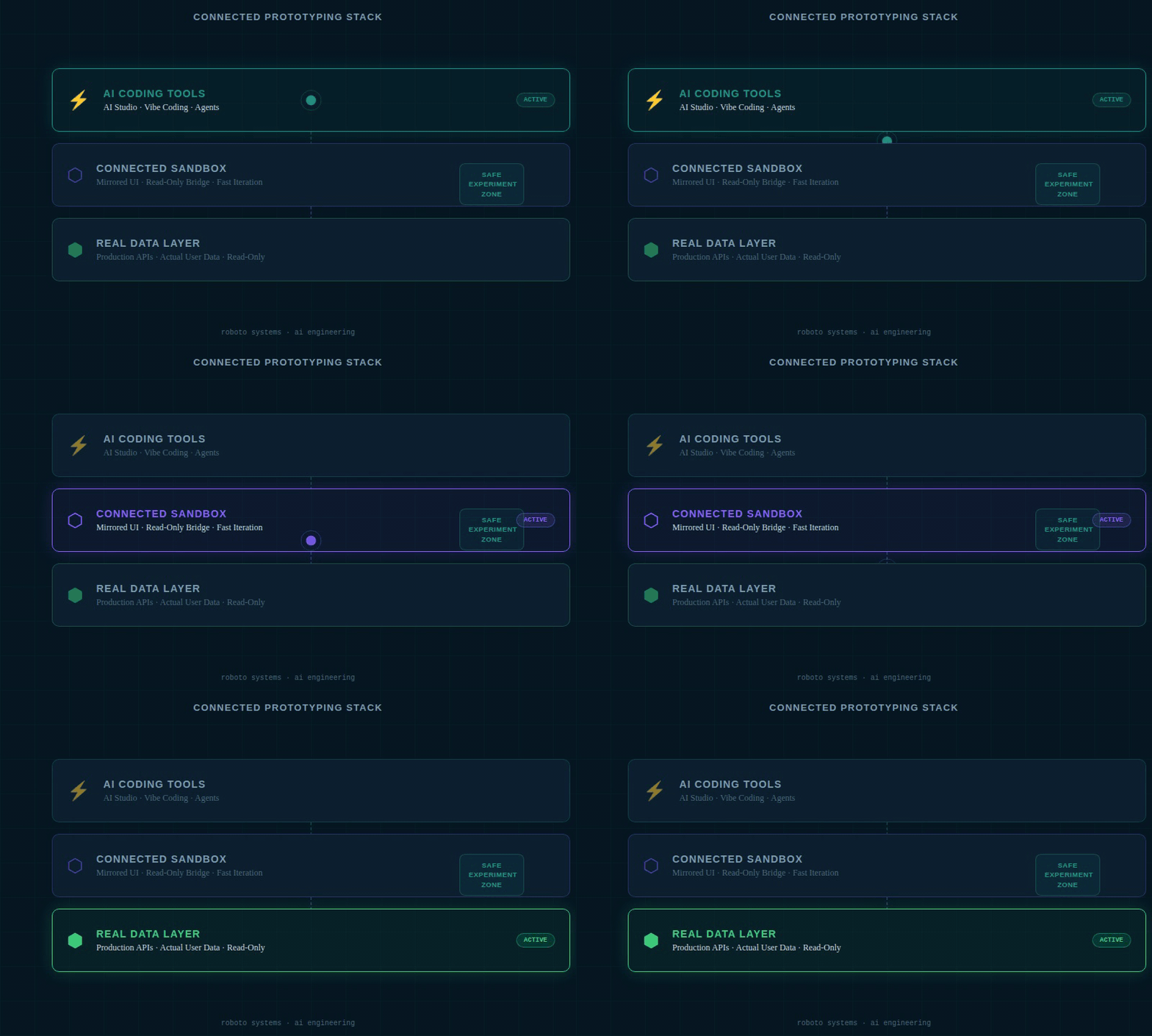
The connected sandbox architecture: your prototype talks to real data through a read-only bridge, so anyone on the team can validate ideas without risk.
When prototyping is connected to real data but insulated from production systems, it becomes accessible to the whole team. A product manager can validate a feature concept with real usage data. A UX researcher can test a new interface against real content. Engineers are freed from being the only path between "idea" and "evidence."
The result is a cultural shift — from a few engineers gate-keeping experimentation to a team where anyone can prototype, gather data, and bring an evidence-backed proposal to the table. The best ideas get tested regardless of who had them. And the teams that build this way find that good ideas start surviving the validation gauntlet at a much higher rate.
How It Works in Practice
The connected sandbox approach removed two barriers at once: the engineering barrier and the political barrier. Before, an idea needed a senior engineer to build a demo before it could even get a meeting. Now, anyone can assemble a prototype that talks to real data, show evidence of what it would do, and get a decision in weeks instead of quarters.
Features that would have died in the planning stage got built and validated. Features that looked great in isolation were quickly proven unworkable against real data — and killed early, before wasting an engineering cycle. The teams that were holed up prototyping were the ones actually landing new features.
The system expanded beyond a single team. Developers across an entire organization gained access to a prototyping environment connected to real APIs, with AI coding tools integrated directly. The relationship between builders, product managers, UX researchers, and engineers changed — not because anyone mandated it, but because the tool made collaboration on real prototypes the obvious path.
The mindset shift that made it work is this: the biggest risk is not breaking the system — it is missing the moment. The teams who build connected sandboxes are not taking fewer risks. They are building a system that makes failure faster, cheaper, and more informative — so that the failures that matter happen early, not in production.
Frequently Asked Questions
What is the blank canvas problem in AI prototyping?
The blank canvas problem is when you build a prototype in isolation — without access to real production data or your actual product's UI. The prototype looks functional in a demo environment, but it cannot validate against how users actually behave or how your system actually responds. Without real data, you are guessing at the most important variables. The fix is a connected sandbox: an environment that mirrors your real product but uses read-only API access so you get real signal without production risk.
Why should developers embrace throwaway code instead of polishing prototypes?
Polishing a prototype carries all its original technical shortcuts — workarounds, hacks, and missed edge cases — directly into production. A clean rewrite, done after you have validated the concept with real data, is faster and produces better code because you already know exactly what the system needs to do. Conviction about the goal makes the second build cleaner than the first. Throwaway code is not a shortcut; it is a deliberate separation of "explore" from "build."
How can a smaller team build their own connected prototyping stack?
The core requirement is read-only API access to your real data source, combined with an AI coding environment where your team can build and iterate quickly. You do not need to mirror your entire production system — even a read-only connection to one key data source transforms what your prototypes can validate. Start with the data your users care most about. Build the sandbox around that. Add UI mirroring as a second step once the data connection is working.
The Short Version
- The blank canvas kills prototypes. A prototype without real data cannot tell you whether the idea works. Before you invest engineering time, make sure your sandbox can reach your actual data — even read-only access changes everything about what you can validate.
- Speed and risk are the same lever. In a connected team system, moving faster amplifies the cost of mistakes. The answer is not to slow down but to build environments where fast experimentation carries no production blast radius.
- Prototypes are evidence, not deliverables. Their job is to prove an idea works — then get thrown away. A clean rewrite driven by validated conviction is faster and better than polishing a shortcut-filled prototype into production code.
- Democratizing prototyping changes the team's idea supply. When only engineers can build prototypes, most good ideas never get tested. Connected sandboxes accessible to PMs and researchers multiply the number of ideas that reach evidence stage — and raise the average quality of what ships.
- The biggest risk is missing the window, not breaking the system. The teams that survive production do not take fewer risks. They build infrastructure that makes failure informative, fast, and cheap — so the only failures that reach users are the ones no sandbox could have caught.
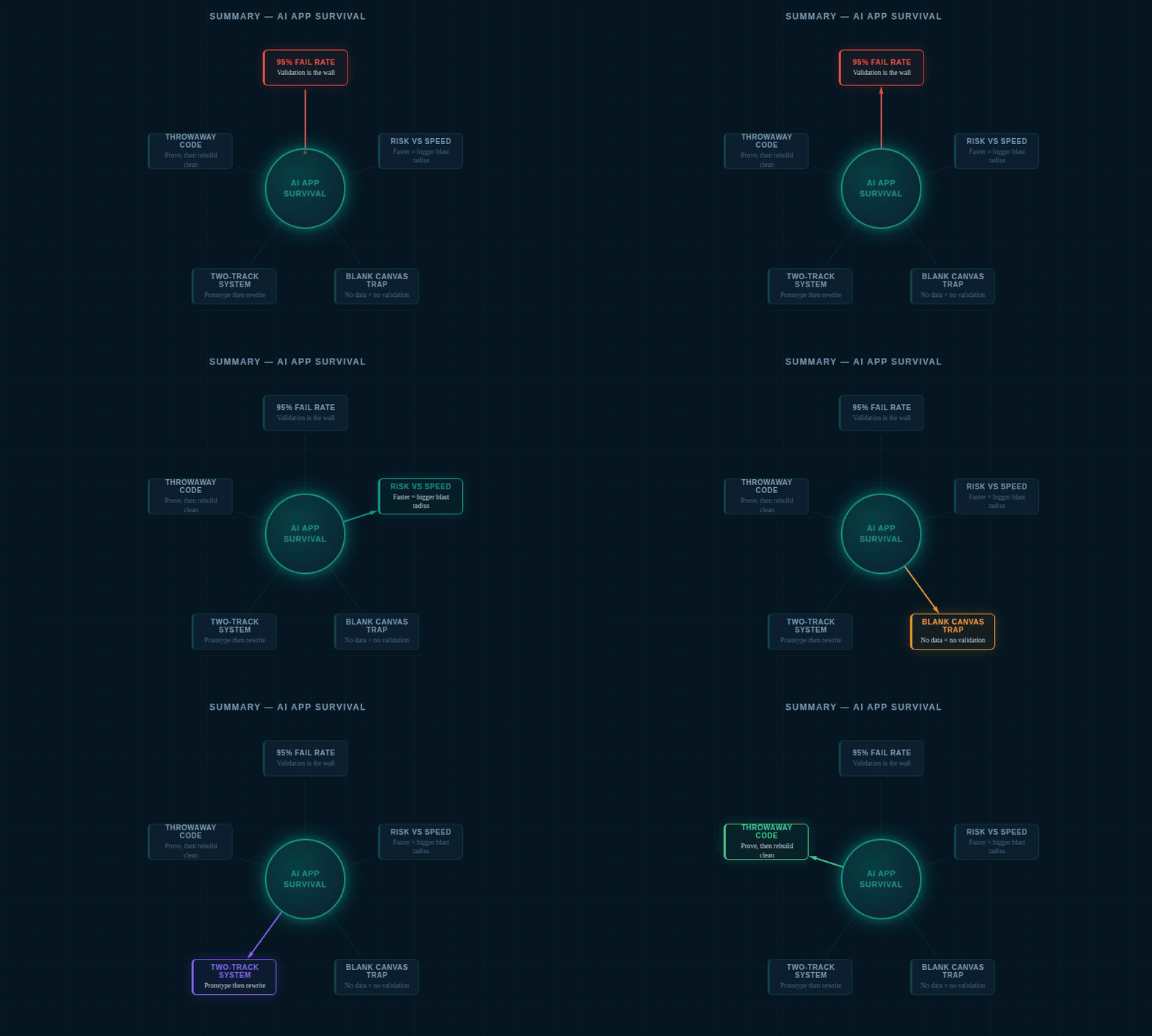
The full picture: five interconnected ideas that determine whether an AI app survives production.
"With AI, we are not just coders anymore. We are architects of safety — building bridges that do not prevent failure, but make failure more successful."